

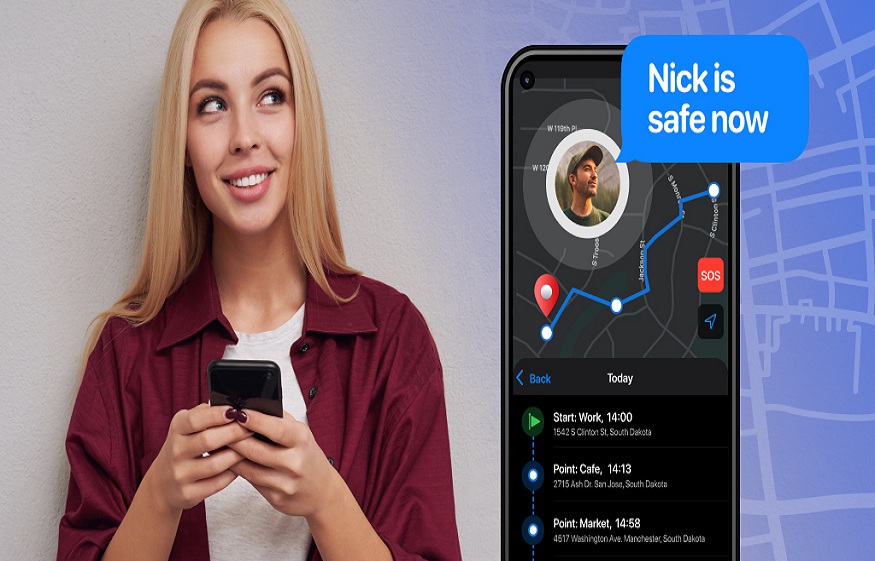
Type “location tracker by phone number” into a search engine and you will find dozens of websites promising the same thing. Enter any number, and within seconds you will see exactly where that phone is on a map. No app to install. No permission needed. Just a number.
It is an appealing idea, especially for a worried parent or someone who has lost touch with a family member. It is also, in almost every case, not true. And for many people, the more important question is the reverse: could a stranger find me, or my child, just because they have our phone number?
This article explains, in plain terms, how phone location really works, who can actually find a phone from its number, and what that means for families.
How a phone’s location is really known
A phone’s location can be known in a few different ways. Each one depends on who has access to which information.
The phone itself works out its own location using satellites, Wi-Fi networks, cell towers, and its sensors. This is the most accurate source. But that information stays on the phone unless the person using it lets an app or a contact see it.
The mobile carrier knows roughly which cell towers a phone is connected to. That gives a general area, sometimes fairly precise in a city and much rougher in the countryside. Carriers have this information because they need it to route calls and data.
Apps with permission can see location if the phone’s owner has allowed it. Maps, rideshare apps, weather apps, and family sharing tools all fall into this group.
Read More : AI Sales Intelligence in Route to Market: How It Works and What It Delivers
Emergency services can receive location when someone calls or texts an emergency number. On Android, Google’s Emergency Location Service sends the phone’s location to emergency providers in supported regions during an emergency call or text. Google says it does not view the location sent.
Notice what is missing from that list: a random website where anyone can type in a number.
So, can a website find a phone from its number?
A legitimate, ordinary website has no way to ask a mobile carrier where a phone is. Carriers do not hand location data to the public, and in many countries they are legally required to protect it.
That protection has been tested. In 2024, the US Federal Communications Commission fined major American carriers nearly $200 million for selling customers’ location data to third-party “aggregators” without proper consent. The carriers challenged the fines, and in June 2026 the US Supreme Court upheld the penalties against AT&T and Verizon. The case shows two things. First, carrier location data is treated as highly sensitive. Second, the old back door that some location services once relied on has been under heavy legal pressure.
So when a website claims it can find any phone’s live location from just a number, it is either exaggerating, relying on a trick, or not delivering anything real at all.
What these websites usually do instead
Most “track by number” sites fall into a few patterns.
They send a link. Some services ask for the number, then send a text message to that phone with a link. If the person clicks it and allows location access in their browser, the site can see their location. That is not tracking by number. It is tracking by the person tapping a link and agreeing, often without realizing what they are agreeing to.
They show a fake search. Some sites show a progress bar, a spinning globe, and messages like “connecting to satellite” or “locating device.” Then they ask for payment before showing results. Those animations are just animations.
They give a rough area. Some services show the general region where a number was first registered, based on its area code or carrier. That might tell you a number came from a certain state or country. It says nothing about where the phone is right now.
They sell a subscription. Many sites charge a very small trial fee, then begin a much larger recurring subscription. The US Federal Trade Commission warns consumers to read the terms of free and low-cost trials carefully, because they often roll into automatic renewals that can be hard to cancel.
Who can actually locate a phone
There are real situations where a phone can be located, but they all involve either the owner’s permission or a legal process.
- The owner, using tools like Google’s Find Hub to find their own lost device
- People the owner chose to share with, through location sharing in Google Maps, family apps, or messaging apps
- Emergency services, when the person calls or texts for help
- Law enforcement, usually through formal legal requests to carriers or tech companies, subject to rules that vary by country
That is the honest picture. A phone’s live location is not open to the public, and should not be.
Why the idea is so convincing
It is worth asking why so many people believe these sites work. Part of the answer is television. Crime dramas often show detectives tracing a phone in seconds from a number on a screen. In real life, police requests to carriers go through legal steps and are not instant, and none of that is open to the public.
Another part is that phone location really is very precise when it is shared properly. People see how accurately a family app or a rideshare app shows a car moving down their street, and assume that same information must be available from the number. It is not. That precision comes from the phone, and the phone only shares it with apps and people its owner has approved.
The last part is that a location tracker by phone number would be genuinely useful in a scary moment. When someone is worried, a promise of instant answers is hard to resist. That is exactly the feeling these sites are built around.
What this means for your family
For most families, this is good news. A stranger who has your child’s phone number cannot simply type it into a website and see where they are. The bigger risks come from elsewhere:
- Links that ask for location. A text or chat message with a link that asks to “allow location” can reveal where someone is, if they tap allow.
- Live location shared in chats. Teens sometimes share live location with people they do not know well, especially in group chats.
- Apps with too much permission. Apps that have background location access and share data with third parties.
- Public posts. Photos and check-ins that reveal where someone lives, studies, or spends time.
These are the things to talk about with your children. Protecting a phone number matters, but protecting what a phone shares matters more.
If you want a deeper look at how these claims hold up, this article on the truth about tracking a location by phone number explains the common methods and why most do not work as advertised.
Simple steps to protect your family
A few habits go a long way:
- Do not tap links from unknown numbers, especially ones that ask for location or payment
- Never allow location access on a website unless you know exactly why it needs it
- Check location permissions on each phone and remove access from apps that do not need it
- Review who can see live location in Google Maps, family apps, and messaging apps
- Be careful with public posts that show home, school, or regular routes
- Teach children to come to you if someone asks for their location or sends a strange link
None of these steps are complicated. Together, they close the real gaps.
If you need to find a family member’s phone
If your goal is to find a family member’s phone, use the tools that are built for it, with that person’s knowledge:
- Find Hub for a lost Android device signed in to a Google account
- Google location sharing for family members who have chosen to share with you
- A family app set up openly on a child’s phone, with the child aware of what it does
If you are worried about someone’s safety and cannot reach them, contact local emergency services. They have proper ways to help that no website can offer.
A note on what any location can tell you
Even when a phone’s location is shared properly, it is an estimate. It shows where a device appears to be, not who is holding it, what they are doing, or whether they are safe. That is true for the best family apps, and it is certainly true for anything a “number tracker” website claims to show.
What to tell a worried relative
Grandparents and other relatives sometimes forward these sites to parents, hoping to help. If that happens, a kind, simple explanation works best: “Those sites can’t really see where a phone is. The safest way is for us to share our location with each other through our phones, and we already have that set up.” It closes the door on the scam without making anyone feel foolish for asking.
The bottom line
In almost every case, no, someone cannot find your live location from your phone number alone. Real location data sits with your phone, your carrier, and the apps and people you choose to share with. Carriers are under strict legal duties to protect it, and those duties have been backed up by regulators and courts.
Read More : HONOR Phones 2026: Which Magic Model Is Made for You?
What families should watch for is not a magic number search, but the everyday ways location slips out: tapped links, shared chats, over-permissioned apps, and public posts. Close those gaps, and your family’s location stays where it belongs.


Leave a Reply